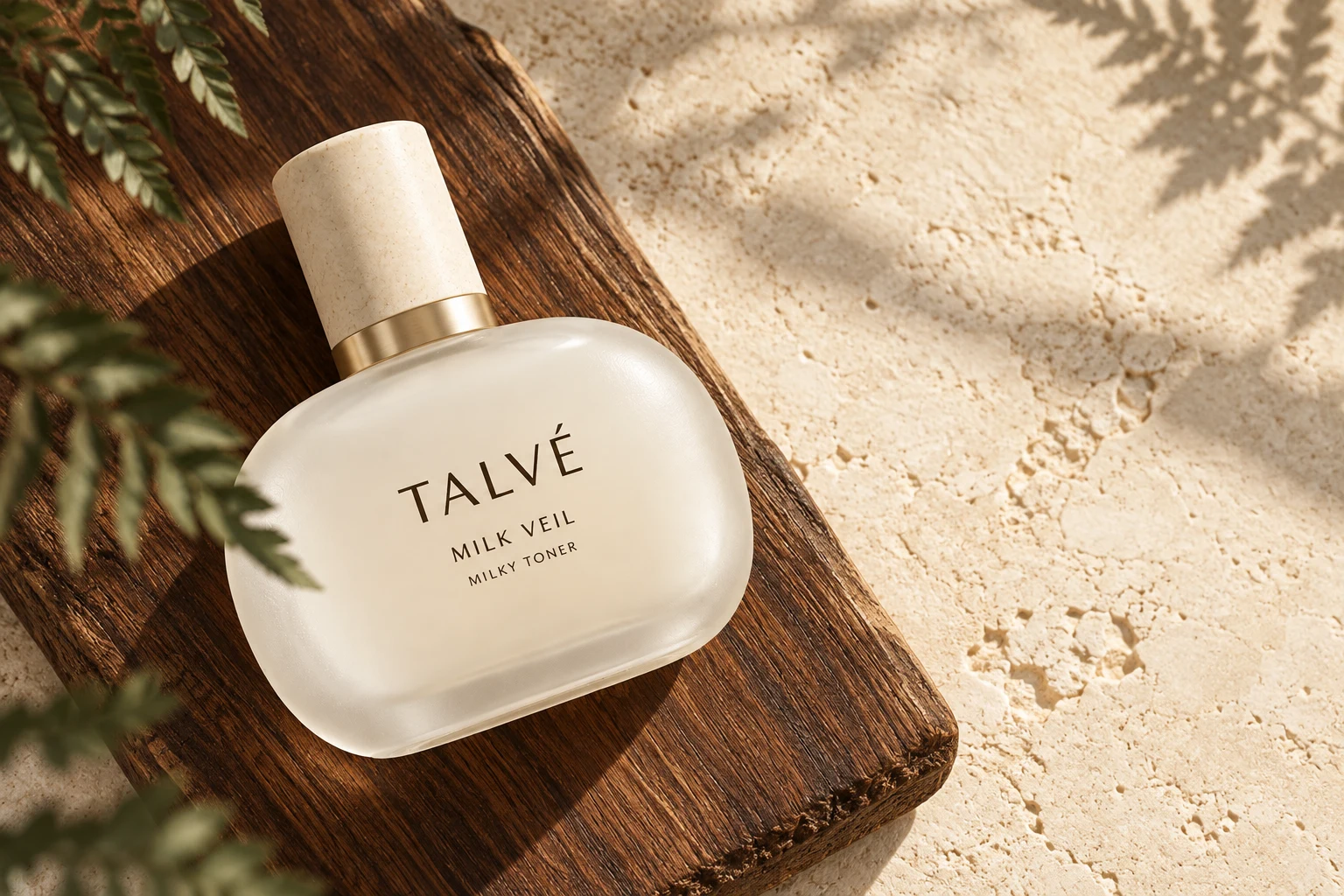
Milky toner, essence or serum? Meet your fluid step.
Beautiful bottles are only the beginning. Find a real place for them in your routine: what milky means, how an essence differs from a serum, and how to choose without adding layer after layer.
Find my layer order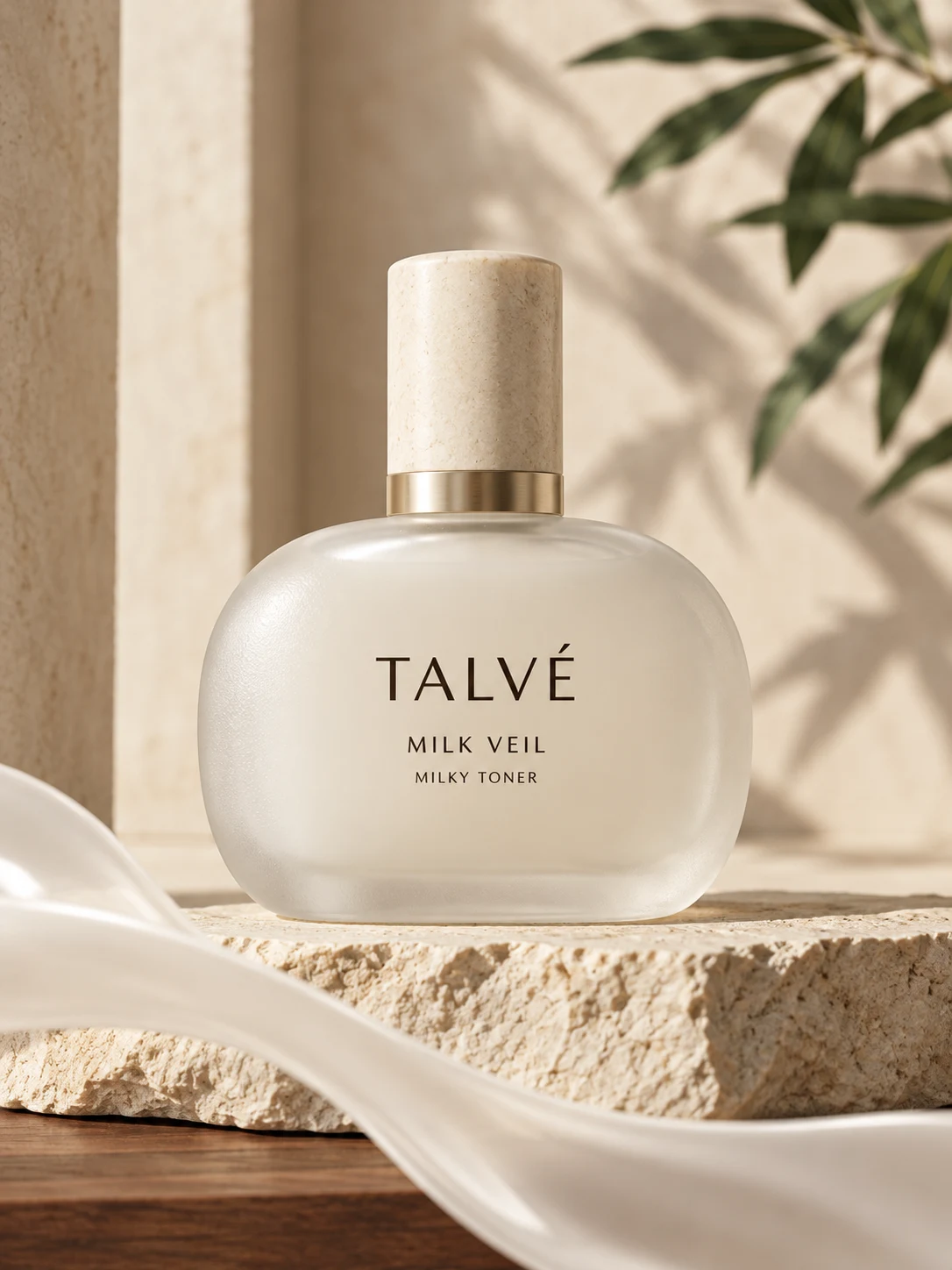
What is a milky toner?
Picture the space between a watery face toner and a rich cream. Much of the appeal of milky toner lives there: a soft appearance, a texture you can almost imagine in your palms, and a fluid moment in a skincare routine. “Milky” describes a texture family, rather than one standard formula.
A milky toner may be intended for hydration, while some products sold under this name also exfoliate. Check the product page or packaging for its intended purpose. A white appearance does not establish that a product contains dairy, and it cannot tell you whether the formula is vegan, fragranced or suited to a particular skin type.
If you are new to the category, begin with what you would enjoy adding to your routine. Perhaps one fluid step, a different texture in place of an existing product, or simply a better understanding before deciding. An appealing trend can be a reason to explore without being a reason to buy everything.
Three names, three ways to explore
Milky toner: usually a fluid step after cleansing. Look for whether the formula is intended to hydrate, exfoliate or serve another purpose. The toner category and milky appearance can guide your browsing, without predicting exactly how an individual formula will feel.
Face essence: a familiar name for a fluid skincare step, often before richer layers. The boundary between toner and essence varies by brand. If both fill the same place in your routine, choosing one can make more sense than automatically using both.
Milky serum: a serum with a milky texture identity. Its role comes from its formula and intended use; its colour does not make it a toner. A serum may be a focused step, but there is no universal rule that every serum is more concentrated than every toner or essence.
For an easy comparison, look at purpose, directions and the complete ingredient list, then consider the texture you enjoy. Category names help organise a shelf. They do not need to decide how many products go on your face.
Where does it go in a routine?
In a simple hydration sequence, a fluid step often follows cleansing and comes before cream. If you use a serum as well, check the instructions for both products. Moving from lighter to richer textures is a useful guide, rather than a rule that overrides directions, especially when a prescription or active treatment has a particular schedule.
In the morning, sunscreen remains its own step. Glow, a dewy finish and skin-barrier language are not alternative names for SPF. In the evening, you do not have to repeat every morning layer. A short sequence can be enough for the products you actually use.
Introduce one new product at a time so it is easier to notice what feels comfortable and how it works alongside the rest of your routine. Seven layers are not a requirement just because they look beautiful in a video. Begin with an application that follows the product’s directions, rather than chasing a particular number of layers.
Choose the feeling you enjoy
If you like a lighter routine, ask which existing step you might replace before asking what else you could add. Toner and essence often occupy the same space on a shelf. Choosing between them can be a satisfying way to simplify.
If you enjoy richer textures, remember that a milky toner can still be very fluid. Its colour does not make it behave like a cream. And if skin feels tight after cleansing, consider the cleanser and moisturiser too, rather than assuming another fluid layer is always the answer.
For makeup days, the way layers sit together matters. If products roll into small bits, try simplifying the sequence, checking amounts against directions and avoiding repeated rubbing. Pilling is not proof that one product cannot absorb; application and interactions between formulas can affect the feel and finish.
Ingredient names worth getting to know
Hyaluronic acid, glycerin, ceramides and peptides often appear in conversations about hydration. They do not all belong to the same family or perform the same role. A helpful way to explore is to learn a role, then return to the complete formula.
Humectants, such as glycerin and forms of hyaluronic acid, participate in hydration in ways that depend on the product. Emollients contribute to a smoother, softer feel. Ingredients that help limit water loss support moisture retention. One product can combine several of these roles.
Ceramides are a family of lipids also associated with skin-barrier structure. Peptides are a broad group of molecules; the general name cannot tell you what a particular product will do. Spotting a familiar ingredient is not enough to predict a result. These are examples from cosmetic ingredient families, not ingredient declarations for the collection.
Want to begin with the list on your own bottle? Our INCI reading guide explains how to explore it while keeping the whole formula in view.
A little more depth, whenever you like
You can enjoy skincare for its feel and still want to understand what happens at the skin. Both kinds of curiosity belong here. Open the explanation that interests you.
What does “absorbs quickly” really mean?
In beauty language, quick absorption sometimes describes the point when a product stops feeling wet or sticky. That sensation can involve spreading, evaporation and the layer left on the surface. It does not mean every ingredient has reached deeper skin layers, and it does not measure activity in cells.
Penetration depends on the ingredient, the formulation and conditions of use. A specific penetration or activity claim needs an appropriate evaluation. A glowing photograph or a satisfying texture demonstration is a different kind of information.
An immediate feeling and a lasting result
Softness, slip and shine can be felt or seen soon after application. Claims about a lasting change in hydration, the appearance of fine lines or barrier function call for a different kind of assessment. Duration, participant numbers, measurement methods and the exact tested formula help put a result in context.
When a percentage catches your eye, look at what it describes: answers to a questionnaire, an instrument reading, or a change from a starting measurement. “Most participants enjoyed the feel” and “a hydration change was measured” are different statements. Both can be useful when the context is clear.
Why colour and one ingredient are not enough
A formula is a system. Water, oils, ingredients that help them mix, preservatives and other components work together to influence stability, feel and purpose. An ingredient list reveals part of that system, but not every concentration, process or individual skin response.
Choose using information about the whole product and pay attention to comfort. Persistent stinging, a rash or an unpleasant reaction is a reason to stop and seek suitable advice. You do not need to push through discomfort to give a trend a chance.
Good to know
Is milky toner better than regular toner? Texture alone does not create a winner. Purpose, composition and personal preference matter. “Milky” is not a quality ranking.
Can oily skin use one? Oily skin can still need hydration, but suitability comes from the individual product rather than its name. Consider the description, formula and your experience; not every milky texture is rich, and not every clear liquid feels light.
What about sensitive skin? Follow product-specific guidance and check for fragrance or ingredients you already know do not suit you. Testing a new product on a small area before wider use can help. Diagnosing sensitivity or a skin condition belongs with a qualified professional.
Do I need a cotton pad? Follow the directions. Some products are intended for palms, others for a pad. One application method is not universally better.
Do I need toner and essence together? No. If both serve the same purpose in your routine, you can choose one. Enjoying skincare can mean keeping a small, well-chosen shelf.
Meet the edit
Milk Veil introduces the collection’s milky-toner direction. Petal Essence explores essence, while Petal Milk belongs to the serum family. Save the products that interest you, get to know them at your pace, and use the layer edit to think about their place in your routine.