
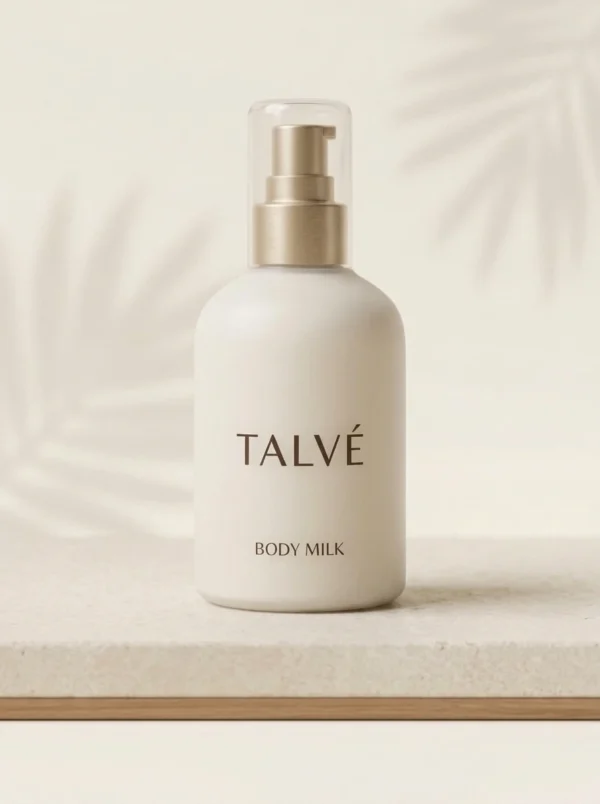
Body lotion
A lotion moment before the day begins, or a richer ritual to make your own. Explore the collection and find your kind of feel.
Two moments of body care
Get to know each product, or save a favourite for when you want to come back.
What is your kind of feel?
Fluid or rich. A quick morning or a slower evening. Choose your preferences for a small shopping brief to take with you.
You can start without the questions: explore the products, then read about textures and details worth comparing.
Your shopping brief
This direction reflects texture and usage preferences. Check individual product details and directions for suitability.
A little more about your next favourite
Body lotion that fits the way you like to feel
Some mornings call for a quick sweep of lotion and a fresh outfit. Some evenings leave room for a richer texture and a slower moment. Both belong in a thoughtful body-care routine. Start with the feeling you want to enjoy, then look at the format, the product details and how it will fit into your day. A beautiful choice should make sense beyond the bathroom shelf.
Body moisturiser is a broad family. Within it, you will find lotions, creams and products described as body butter or body milk. Those names help you navigate, but they are not a universal texture scale. Two lotions can leave very different finishes. The individual product description, directions and your own experience add the detail that a format name cannot provide.
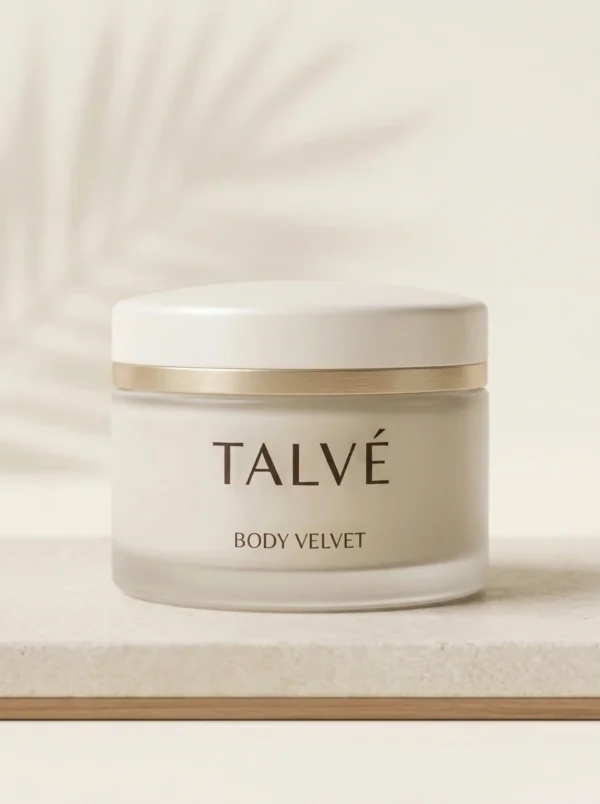
Here you can explore Body Milk and Body Velvet, open each product page and keep a favourite in your beauty edit. If you are still deciding what matters most, the preference map above turns a few everyday choices into a useful shopping brief. You do not have to pick the richest texture or the longest ingredient list. Look for something you would enjoy making part of your routine.
Lotion, cream or body butter?
A body lotion is generally a more fluid format than a cream. That makes it an interesting starting point if you enjoy easy spreading over larger areas such as your arms and legs. Creams are usually thicker, while body butter is a familiar name for a rich texture. These are broad shopping directions, rather than promises about every product that uses the words.
Finish is a separate question. A fluid lotion may leave a noticeable sheen; a rich cream may feel less greasy than you expected. The complete formula and the amount applied both influence the experience. Do not assume that a product will disappear instantly, stay comfortable under clothing or last for a particular number of hours just because of its format.
Body milk suggests a milky lotion style. It does not, by itself, tell you whether a formula contains ingredients of animal origin. Likewise, the word butter does not confirm which botanical butters are present. Read the ingredient list to answer a composition question, and the texture description to understand the intended feel.
There is no rule that makes butter an upgrade and lotion a compromise. You might enjoy a lighter-feeling format during a busy morning and a more substantial texture at night. You might also prefer one product for both. Choosing a format is about finding a useful place for it, not climbing an imaginary ladder of richness.
Get to know a texture in three moments
Separate the experience into what happens as a product leaves its packaging, as you spread it and after application. A substantial cream can soften as you work it over the skin. A flowing lotion can still leave a distinct finish. Words such as silky, velvety and lightweight describe a direction, but your own preference decides whether that direction feels right.
When trying a new product, follow its directions and begin on a small area. Notice whether the amount you use spreads comfortably and whether you enjoy what remains on the surface. You do not need to recreate the generous swirl shown in a campaign photograph. Texture photography expresses a mood and a material; it is not necessarily an application instruction.
If you have samples to compare, give them reasonably similar conditions: a similar area, amount and moment in your day. This is a way to make your preference clearer, rather than a clinical test. A note such as easy to spread, but more shine than I want is more useful for your next choice than a simple good or bad score.
It can help to separate immediate enjoyment from longer-term expectations. A pleasant finish is worth noticing, but it cannot tell you everything about ongoing moisturisation. Keep your sensory notes for the questions they can answer, and look for product-specific evidence when a claim goes beyond how the texture feels.
From the shower to whatever comes next
Body care can live in a moment you already have. Applying moisturiser to slightly damp skin after washing is a familiar starting point, following the directions of the product you choose. Keep it within easy reach, gently pat with your towel and take a little time to apply it. A useful routine does not need to turn every shower into a long ceremony.
If you get dressed soon afterwards, finish becomes part of the decision. Look for relevant detail in the product description, then notice how the experience works with the clothes you actually wear. There is no single waiting time that applies to every lotion, every application amount and every climate. Fast-absorbing wording belongs to the individual product, not the entire category.
An evening application may give you more room to enjoy massage, texture and, if you like it, fragrance. That does not automatically require a separate night formula. The difference may simply be the pace of the moment. Choose what you would like to do regularly, rather than designing an elaborate ritual you only enjoy occasionally.
Keeping a product in sight can make the routine feel more inviting, but choose its location with the storage directions in mind. A sunny ledge may photograph beautifully without being the right home for a cosmetic product. Let the label guide storage and let your habits guide convenience.
A fragrance moment, or space for your perfume
Fragrance can be a lovely part of body lotion. You may want a scent that carries the feeling of a shower into the rest of the day, or prefer a product that leaves room for your perfume. Before comparing bottles, decide whether scent is a central part of your choice or a detail you would rather keep quiet.
If you enjoy layering lotion and perfume, start with the scent you already know and read about the other. Floral, woody and citrus are broad families. They do not guarantee that two products will blend exactly as you imagine. Where possible, get to know a fragrance in person before choosing a large size, especially when scent is the main reason you are drawn to it.
A preference for fragrance-free care is different from a preference for a subtle scent. A product with little noticeable smell is not necessarily free from fragrance ingredients. If that distinction matters to you, check the explicit product description and the ingredient list. Packaging colour and the word gentle cannot answer that question.
You can also enjoy a scent without wanting it in every part of your routine. A scented wash, a scented lotion and a perfume are separate choices. Consider the experience as a whole. If you have a known sensitivity or have been advised to avoid particular ingredients, follow that advice rather than choosing by fragrance preference alone.
Choose packaging for the way you will use it
A pump, a tube and a jar each invite a different movement. A pump can suit a permanent place beside your towel. A tube may be convenient to close and put away. A jar brings you closer to a substantial texture. These are practical preferences, not measures of how effective a formula is. The shape of the container cannot establish hydration performance or a period of use after opening.
Think about where the product will live before choosing a large size. Do you have a stable shelf? Is the closure comfortable for your hands? Will you want to take it away for a weekend? Product photography can show proportions and details, but your routine determines which details matter most. Keep the product in its original container and follow its storage instructions.
One pump is not a standard unit across products. A full press from one bottle may dispense a different amount from a press on another. Counting pumps without knowing their output does not create a reliable comparison of quantity or value. Begin with the product directions and get to know the amount that spreads comfortably for your intended use.
A refill option, where offered, also needs a little attention. Check which container it is designed for and how the brand instructs you to refill it. Refill language is useful when it describes a real compatible system. It is not a reason to combine different products or move a formula into a decorative container without guidance.
Build a small body-care wardrobe
You do not need a long line of products to begin. A body wash and a leave-on moisturiser have different jobs: one cleanses and is rinsed away, while the other remains on the skin according to its directions. Oil, scrub and hand cream can have their own places later. Being part of the same collection does not mean that every item needs to be used together.
If your goal is a comfortable post-shower moment, start by choosing the moisturiser and a way of using it that you will enjoy repeating. Before adding another item, decide what it brings: a separate step, a different fragrance experience or a format for travel. A clear purpose makes it easier to avoid several purchases that would play the same role on your shelf.
Area of use matters too. A body product does not automatically become suitable for the face, eyes or intimate areas. Follow the intended uses on each label. Persistent dryness, cracking or irritation is a different question from finding a texture you enjoy, and deserves appropriate professional advice.
A small routine also makes preferences easier to notice. If you change your wash, lotion and additional treatments at once, it becomes harder to tell which change you liked. Give each product a clear role. The aim is a routine that feels considered, rather than a collection that keeps growing without a reason.
Read the formula as a whole
A familiar ingredient can be a good starting point for curiosity, but it is not the full story of a body cream. An INCI list identifies ingredients in the formula. It is not a complete recipe, a sensory test or a reliable prediction of how the product will feel on you. Read it alongside the product purpose, directions and information about the finished formula.
Moisturising formulas may combine ingredients with different roles, including attracting water, softening the skin surface and helping limit water loss. One recognisable name does not replace everything else in the list. Water, ingredients that help keep a mixture stable and ingredients that shape its texture are also part of how the product is made to work as a usable cosmetic.
When comparing two labels, start with a question you actually want answered. You might be checking for an ingredient you are interested in, or one you have been advised to avoid. That is more precise than trying to decide which list looks more natural. A long chemical name is not, on its own, a quality verdict.
Our ingredient-reading guide explains how names and ordering work and where interpretation has limits. It is there when you want a closer look. You can stay curious about formulas without turning every everyday beauty decision into a chemistry assignment.
A closer look at moisture, softness and finish
Moisture is a word that can bring several different experiences together. Softness is something you feel by touch. Sheen is something you see. Comfort is your personal experience. A measurement of hydration or water loss is a different kind of observation, made using a method under particular conditions. Enjoying a product immediately after application does not establish its longer-term clinical performance.
The skin barrier helps limit water loss to the surrounding environment. Moisturisers can support care of the outer skin without needing a dramatic promise of deep penetration. The phrase absorbs deeply is not a universal quality measure. A product that seems to disappear from the surface has not thereby demonstrated a particular biological delivery depth.
If a product page gives a numerical result, look at what was measured. Was it hydration, appearance or participants answering a questionnaire? Ask when the measurement was taken and whether it describes the actual finished product. A finding about an isolated ingredient is not automatically a finding about every lotion containing it.
This distinction leaves room for both pleasure and precision. You can choose a product because you love its finish while also wanting clear support for a more specific claim. Good information makes those two conversations easier to separate. It should help you make a choice, rather than make a simple routine feel intimidating.
Face-care ingredients meet body care
Hyaluronic acid, niacinamide, ceramides and urea now sit alongside familiar texture names in body-care conversations. The interest invites the same curiosity about the body that many people bring to facial skincare. It does not mean that all those ingredients belong in one routine, or that every body lotion contains them.
Turn an ingredient trend into a useful question. If a particular name interests you, learn what it refers to and then check whether it appears in the product in front of you. Our hyaluronic acid guide separates ingredient names, roles and the conclusions a label cannot support on its own. Curiosity becomes more valuable when it connects to the actual formula.
Body serum and milky lotion are also part of the evolving language of the shelf. They are format descriptions, not ranks in a quality hierarchy. There is room to enjoy a new texture without feeling that an existing favourite has become obsolete. Let the individual product details and the way you want to use it lead.
A trend can also reveal a useful preference: perhaps you want more detail about a formula, a lighter-feeling application or a simpler routine. Keep that underlying preference in view. It remains relevant after the newest product name stops appearing in every beauty conversation.
Compare value with the right units
The bottle price is one starting point. For a straightforward comparison of two sizes of the same product, divide the price by the quantity and multiply by one hundred. As an illustration only, 200 ml priced at 120 shekels works out at 60 shekels per 100 ml. These example numbers are not the price or size of a product in this collection.
Across different products, unit price cannot tell you which formula suits you better. Nor should 100 grams and 100 millilitres be treated as interchangeable units. A product you enjoy using and one that stays untouched on the shelf can be very different choices, even when their displayed unit prices are similar.
Choose a size that fits your habits. A larger container may make sense for a familiar favourite; a smaller option, where available, may suit an introduction or a travel bag. Check the period-after-opening symbol and the storage directions. Do not estimate how many months every cream will last from its photograph or from the pump count of a different product.
It can help to write down the exact product and size you are comparing. Similar names, different formats and gift sets can make a quick comparison confusing. Keep fragrance preferences, intended use and quantity visible alongside the price, so that a numerical saving does not become the only reason for a purchase.
A few more useful answers
Should you change body lotion every season? There is no automatic need. Notice whether your preferences shift with weather, clothing or washing habits. If the product remains pleasant and suitable, a new season is not a reason by itself to replace it. A significant change in how your skin feels is a reason to reconsider your routine and seek advice when appropriate.
Can body oil replace lotion? Ask which role you want it to play. Oil can offer a different application and finish, but it is not necessarily equivalent to a lotion that also contains water. If you enjoy both, follow their directions and consider how the combination feels. More layers are not automatically a better choice.
Can a scented body lotion replace perfume? It can be part of the fragrance you enjoy wearing, but its strength and duration should not be assumed to match perfume. Choose it first as a body-care product you enjoy using. If scent is your main interest, explore the fragrance family and the particular product description.
Is it a good idea to start several new body products together? Giving each product a clear place makes it easier to understand your experience. Several changes at once can obscure what you liked or what did not suit you. If irritation develops, stop using the product and seek advice as needed rather than continuing to complete a trial period.
How do you choose a body-care gift? Begin with what you know about the recipient: their fragrance preferences, a format they enjoy and whether they like a quick routine or a slower ritual. A familiar preference is a better guide than assuming the richest texture or largest container will suit everyone. Save a couple of possibilities and return when the choice becomes clearer.